


It’s 8:00 AM on a Tuesday. Your inbox pings. The subject line is sterile, professional, and terrifyingly vague: “Important Update Regarding Your Role at Oracle.” Your stomach drops instantly.
You’ve just become part of the latest wave of the Oracle layoffs.
In the first quarter of 2026 alone, the technology sector has seen a brutal reshuffling. We aren’t just witnessing a market correction anymore; we are watching the foundation of Silicon Valley being torn up and rebuilt in real-time. While Wall Street investors cheer for leaner margins and skyrocketing stock prices, thousands of dedicated professionals are left holding a severance package and staring at a carefully drafted, legally bulletproof email.
But what does the Oracle layoffs email actually say? What are the hidden messages buried in the corporate jargon? And most importantly, what does this massive shift signal for the future of tech employment across the globe?
If you are a tech professional trying to survive the AI revolution, an investor watching the cloud wars, or simply someone trying to make sense of the modern workplace, you need to read between the lines. The future of work is arriving, and it is unapologetically ruthless.
Here is the full breakdown of what is happening, why it’s happening, and what comes next. Read more article topics on Business and Finance “NASA Artemis II Launch: The Ultimate 2026 Mission Guide AJH Nex”
1. The Anatomy of the Oracle Layoffs Email
When a trillion-dollar tech giant decides to trim its workforce, nothing is left to chance. Every single word in the Oracle layoffs email has been vetted by HR, legal, and PR teams. It is designed to mitigate legal risk, project forward momentum to shareholders, and deliver life-altering news as smoothly as possible.
Let’s dissect the anatomy of the typical corporate layoff email hitting inboxes in 2026.
The Subject Line: Vague but Urgent
Usually, it reads something like: “Organizational Update” or “Changes to the [Specific Division] Team.” It never uses the word “layoff” or “termination” in the subject. This creates a terrifying curiosity gap for the employee opening it.
The “Macro-Environment” Excuse
The first paragraph always sets the stage. It usually sounds like this:
“As we continue to navigate a rapidly evolving technological landscape and pivot our core strategies toward next-generation Cloud Infrastructure and Enterprise AI, we have had to make difficult decisions regarding our organizational structure.”
The Translation: We are spending billions on AI data centers and Nvidia chips, and we need to free up capital. Legacy departments are footing the bill.
The Delivery of the Blow
By paragraph two, the tone shifts from global strategy to harsh personal reality.
“Unfortunately, this restructuring means your role has been impacted. Today will be your last active day at Oracle.”
It is swift. It is absolute. There is no room for negotiation. Access to Slack, internal emails, and company VPNs is typically severed within minutes of the email being sent.
The Cushion (Severance and Benefits)
The email then pivots to damage control.
“We deeply value your contributions. To support your transition, we are offering a comprehensive severance package, including [X] weeks of base pay, COBRA healthcare coverage for [Y] months, and access to outplacement services.”
While Oracle historically offers competitive severance, the psychological blow of sudden disconnection is profound. You aren’t just losing a job; you are instantly exiled from your professional community.
2. The Human Cost Behind the Silicon Valley Playbook
It is easy to look at the Oracle layoffs 2026 wave as just numbers on a balance sheet. But behind every percentage point of margin improvement is a human story.
Take Marcus, a senior cloud architect based in Austin, Texas. Marcus survived the pandemic tech boom, relocated his family for the company, and was actively leading a team transitioning legacy clients to Oracle Cloud Infrastructure (OCI). His email arrived while he was drinking his morning coffee.
“I felt like I was doing everything right,” Marcus shared in a recent LinkedIn post that went viral. “I upskilled. I learned the new AI protocols. But at the end of the day, an algorithm determined my department was geographically redundant.”
This is the new reality. Loyalty and hard work are no longer shields against algorithmic restructuring.
Experts Are Saying…
Dr. Elena Rostova, a prominent tech labour analyst, notes the cultural shift in 2026:
“We have moved from the ‘growth at all costs’ era of the 2010s to the ‘efficiency at all costs’ era of 2026. Companies like Oracle are no longer laying people off because they are running out of money. They are laying people off to reallocate capital toward artificial intelligence. It is a strategic pivot, not a distress signal.”
This is the hardest pill for laid-off workers to swallow. The company isn’t failing; it is thriving. It just decided it doesn’t need you for its next chapter.
3. The Trend Timeline: How We Got to 2026
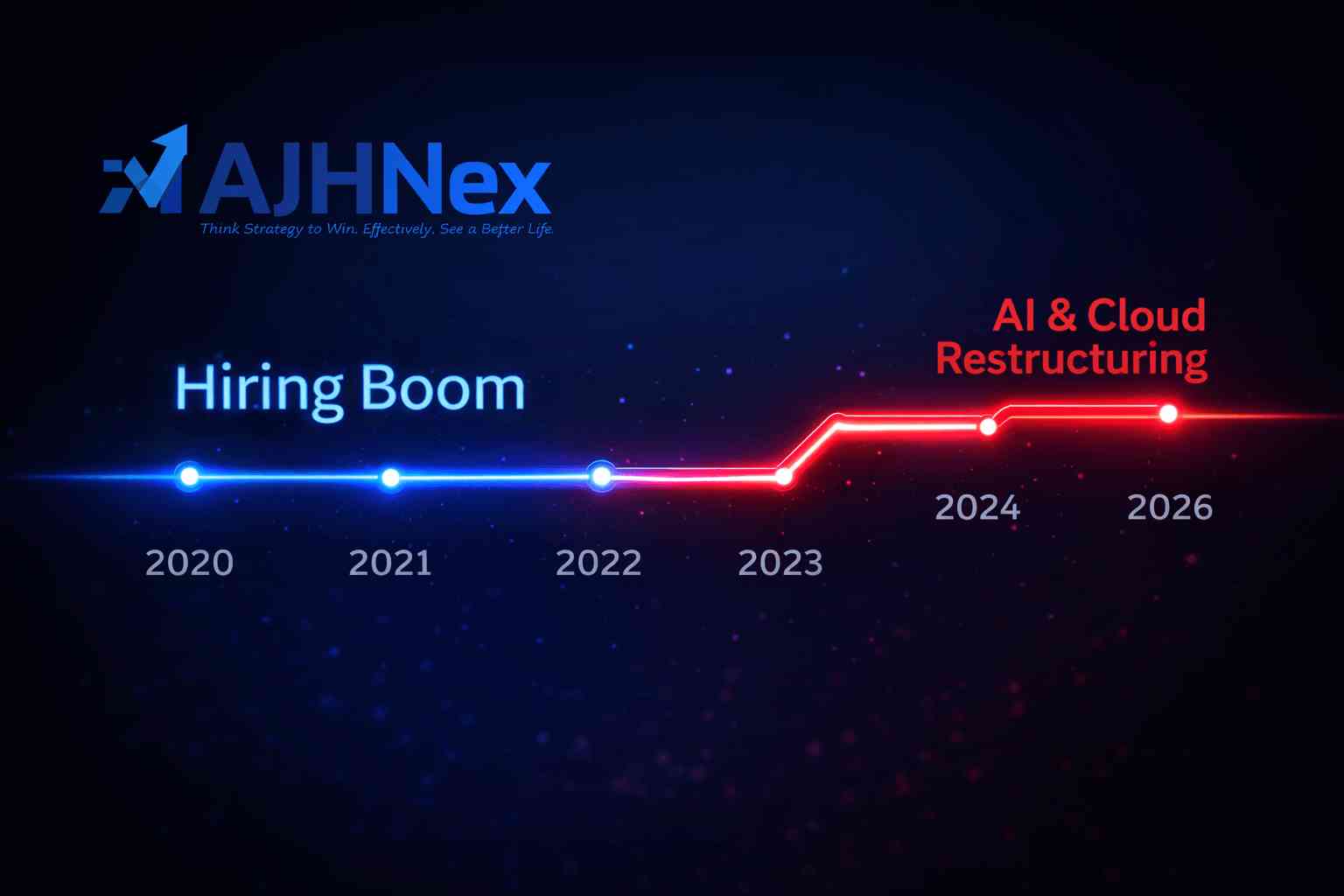
To understand the Oracle layoffs, you have to zoom out. This didn’t happen overnight. It is the culmination of a multi-year tech hangover.
The Pre-2024 Hiring Binge
During the pandemic, tech companies hired as if the digital gold rush would never end. Oracle, competing fiercely with Microsoft Azure and Amazon Web Services (AWS), scooped up talent globally to build out its cloud capacity.
2024–2025: The Great Rationalization
Interest rates rose. Free capital dried up. Tech companies realized they were bloated. We saw the first massive waves of layoffs across Meta, Google, Amazon, and Oracle. But those layoffs were about trimming the fat. They were about undoing the over-hiring of 2021.
2026 (Present): The AI-Driven Restructuring
This is where we are now. The 2026 layoffs are different. They aren’t about trimming fat; they are about amputating healthy limbs to graft on robotic ones. Oracle is aggressively pivoting to become the backbone of enterprise AI. If your role doesn’t directly contribute to AI infrastructure, advanced cybersecurity, or high-tier cloud architecture, you are considered expendable.
The Future (2027 and Beyond): The Fractional Workforce
What happens next? The era of the bloated, 100,000-person tech giant is ending. Tomorrow’s tech companies will rely on small, hyper-specialized core teams supported by AI agents and highly paid, fractional contractors who are brought in for specific sprints and then let go.
4. Why Oracle? Why Now? The Cloud Wars Escalate
If you are an investor or a tech professional, you need to understand the underlying mechanics of Oracle. Why is Larry Ellison’s empire making these cuts right now?
It comes down to three letters: OCI (Oracle Cloud Infrastructure).
Oracle has historically been known for its legacy database software. But legacy software isn’t sexy to Wall Street, and it isn’t the future. Oracle has been in a brutal, multi-billion dollar knife fight with AWS, Microsoft Azure, and Google Cloud to capture the enterprise cloud market.
Recently, Oracle has gained significant ground. They have formed unexpected partnerships with Microsoft and Google to allow seamless multi-cloud environments. They are building massive, nuclear-powered data centers to house the Nvidia GPUs required to train next-generation AI models.
Here is the harsh truth: Building nuclear-powered AI data centers is incredibly expensive.
To fund this futuristic vision, Oracle has to cut costs elsewhere. Marketing teams, legacy software support, mid-level HR, and redundant management layers are being systematically erased to free up billions in capital. The Oracle layoffs 2026 strategy is a direct wealth transfer from human payroll to silicon infrastructure.
5. The Ripple Effect: USA, Canada, and Germany
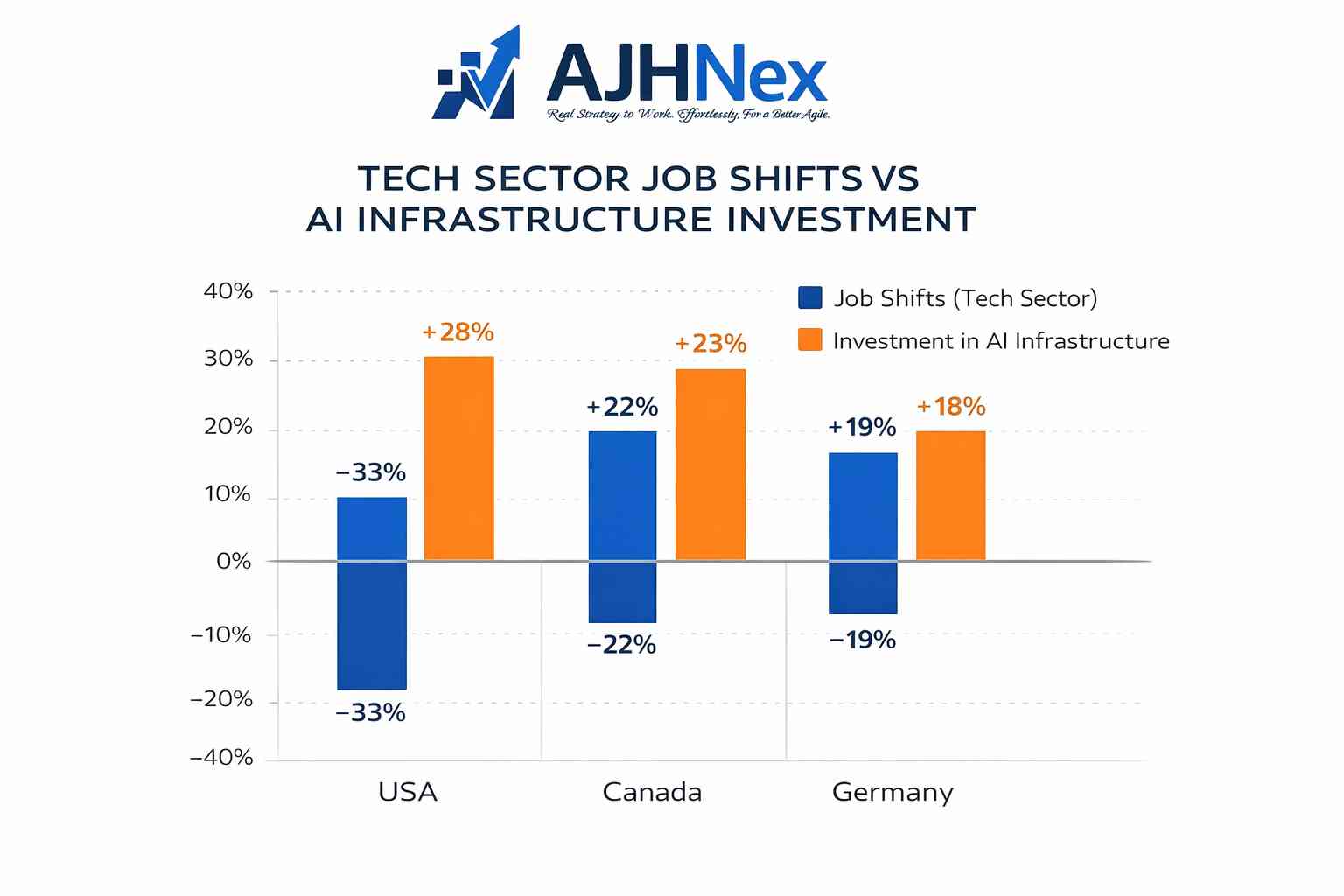
The Oracle layoffs are not confined to Silicon Valley. This is a global restructuring, and it is playing out very differently depending on where you live.
USA: The Swift Cut (Silicon Valley & Austin)
In the United States, employment is largely “at-will.” When Oracle decides to cut an Austin-based team, it happens in seconds. The emails go out, access is revoked, and the severance is wired. The impact on local economies, particularly in tech hubs like Austin, Seattle, and the Bay Area, is immediate. Coffee shops near tech campuses empty out. Luxury apartment rentals stall. The US worker bears the brunt of the swift pivot.
Canada: The Restructuring Tech Hub (Toronto & Vancouver)
Canada has become a major secondary hub for tech giants seeking top-tier talent at a slight discount to US wages. However, Canadian labor laws require more notice and more robust severance packages than the US. Layoffs here often take the form of “working notices” or heavily negotiated exit packages. The Oracle layoffs email in Toronto might look similar, but the legal reality behind it is more complex, often leading to a slower, agonizing phase-out period for the teams involved.
Germany: The Bureaucratic Battleground (Munich & Berlin)
In Germany, you cannot simply send an email and lock someone out of their laptop. German labor laws are notoriously protective of employees. Companies must consult with the Betriebsrat (Works Council) before executing mass layoffs. They must prove financial necessity and use a “social selection” process (protecting older workers or those with families).
For Oracle, laying off staff in Munich takes months of negotiation. Consequently, multinational tech companies are becoming increasingly hesitant to hire full-time staff in strict EU jurisdictions, opting instead for contractors or shifting roles to more flexible labour markets.
6. The “Big Picture” Perspective: What Happens Next?
If you want to survive the tech landscape of the late 2020s, you have to look at the big picture. The Oracle layoffs are a symptom, not the disease.
The tech industry is undergoing a fundamental paradigm shift. We are moving from the Information Age to the Automation Age.
The End of the “Rest and Vest” Era
For years, the running joke in Silicon Valley was the “rest and vest” employee—a mid-level manager at a massive tech company who did minimal actual work while collecting a massive salary and waiting for their stock options to vest.
That era is dead. AI can now write code, debug software, generate marketing copy, and manage basic HR queries. If your job consists of moving information from one spreadsheet to another, or managing people who move information, you are in the crosshairs.
Share-Worthy Insights for 2026
The AI Premium: “AI isn’t taking your job. A professional who knows how to use AI is taking your job.”
The Loyalty Myth: “Your company is a platform, not a family. Treat your career like a business, not a marriage.”
The Pivot: “The most valuable skill in 2026 is not coding; it is adaptability. How fast can you unlearn old systems and master new ones?”
The New Blue-Collar Tech Worker
Interestingly, while software engineers face layoffs, there is a massive shortage of physical tech workers. Who is building the data centers? Who is installing the cooling systems for the Nvidia chips? Who is laying the fiber optic cables? The future tech boom might not be in the software, but in the physical hardware infrastructure that makes the software possible.
7. Balancing the Scales: Investors vs. Professionals
Because the intent behind searching for Oracle layoffs 2026 is mixed, we have to address the two distinct audiences watching this unfold.
For the Investors: A Bullish Signal?
Wall Street loves a layoff. It sounds callous, but it is mathematically true. When a company announces a 5% reduction in workforce, its stock price almost always jumps the same day.
For an investor holding $ORCL, the layoffs are a signal of financial discipline. It shows that leadership is willing to make hard choices to protect profit margins and fund the necessary AI pivot. Oracle’s aggressive move into cloud infrastructure is positioning it as a dark horse capable of challenging AWS and Microsoft. For shareholders, the Oracle layoffs email is not a tragedy; it is a catalyst for the next quarter’s earnings report.
For the Professionals: A Wake-Up Call
If you are a tech professional—whether you just received the email, or you are watching your colleagues pack their digital desks—this is your wake-up call.
You cannot rely on a single corporate entity for your financial safety.
Your 2026 Survival Checklist:
Audit Your Skills: Are you working on legacy systems, or are you working on the systems your company is bragging about in their shareholder meetings? If it’s the former, pivot immediately.
Build a Personal Brand: You need to be visible outside of your company’s internal directory. LinkedIn, GitHub, and industry forums are your insurance policy.
Embrace Fractional Work: Be prepared for a future where you might have three clients instead of one employer.
Master the AI Tools: Don’t fight the tide. Learn how to use generative AI to make your own workflows 10x faster. Become the person the company needs to manage the AI, rather than the person the AI replaces.
The Harsh Reality of the Inbox
The Oracle layoffs email is a cold, calculated piece of corporate literature. It represents the brutal efficiency of modern capitalism. But it also represents an opportunity.
The tech industry is not shrinking; it is evolving. The billions of dollars saved on payroll are being poured into new, uncharted territories of technology. The jobs of 2030 are being created right now, in the ashes of the jobs of 2026.
If you find yourself reading that email, allow yourself the grace to grieve the loss of your routine, your colleagues, and your comfort. It is a deeply emotional, jarring experience.
But once the shock wears off, remember this: the email only ends your time at one specific company. It does not dictate your value in the market. The tech world is restructuring, and your next move is to figure out where you fit in the new blueprint.
The future is indifferent to our comfort. It is up to us to adapt.
What does the Oracle layoff email actually say?
The email is highly sanitized and legally vetted. It usually features a vague subject line like "Organizational Update." The body of the email blames the "macro-environment" and the company's necessary pivot toward AI infrastructure before swiftly informing the employee that their role is eliminated. System access is typically revoked within minutes of the email hitting the inbox.
What is included in the Oracle severance package?
While exact terms depend on the employee's location, role, and tenure, Oracle typically offers a competitive cushion. This usually includes a set number of weeks of base severance pay, several months of COBRA healthcare coverage (in the US), and access to third-party outplacement services to help impacted employees find new jobs.
How do these layoffs differ between the US, Canada, and Germany?
The execution of the layoffs varies wildly by local labor laws:
USA: Layoffs are immediate and ruthless due to "at-will" employment.
Canada: Requires longer working notice periods or heavier negotiated exit packages.
Germany: Protective labor laws require Oracle to consult with Works Councils and use a "social selection" process, turning an immediate cut into a months-long bureaucratic negotiation.
Are the 2026 Oracle layoffs a bad sign for investors?
Historically, Wall Street reacts positively to tech layoffs. For investors, these cuts signal that Oracle's leadership is disciplined about protecting profit margins and committed to funding the high-growth AI sectors necessary to compete with Amazon Web Services (AWS) and Microsoft Azure.
How can tech professionals protect themselves from future layoffs?
The "rest and vest" era is over. To survive, tech workers need to audit their skills and pivot away from legacy systems. Embracing AI tools to 10x your own productivity, building a visible personal brand outside of your company's internal network, and preparing for a future of highly specialized "fractional" contract work are the best ways to future-proof your career.
